


Geometry Dash Lite
4.4496.73K Reviews
App Specs
- Version
- 2.2.147
- Updated On
- License
- Free
- Downloads
- 500,000,000+
- Developer
- RobTop Games
- Categories
- Arcade
- Platform
- Android, iOS
Screenshots
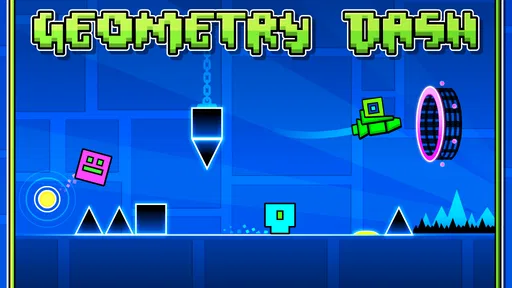
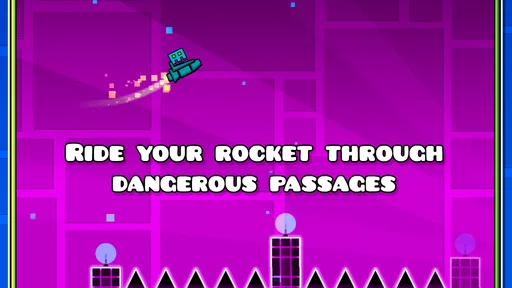
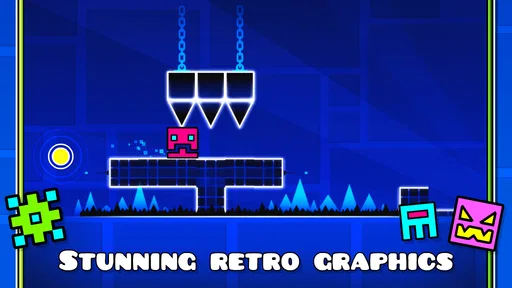
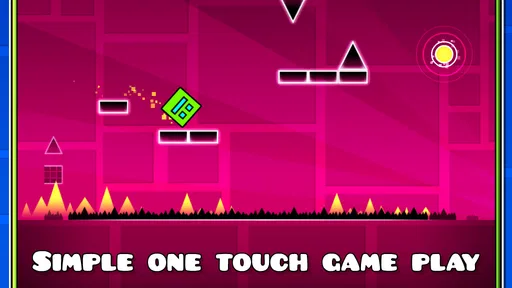
 Analysis by AppCompare
I like games that can turn a spare minute into a small personal challenge, and Geometry Dash Lite has an immediate hook: one touch can send a geometric character into a tightly timed run where a single mistimed move ends the attempt. That makes it easy to understand and surprisingly hard to put down. The first few sessions are exciting, but the more useful question is whether the appeal lasts after the novelty wears off. In my experience, it does for players who enjoy learning patterns and retrying a difficult section; it is less convincing for anyone looking for a relaxed game that lets them make progress without repeated failure.
Why the first sessions grab your attention
The basic interaction is easy to pick up, so I can start playing without a long tutorial or a complicated control scheme. The challenge comes from acting at precisely the right moment while the level keeps moving. That combination makes the opening feel lively: I understand what I need to do, but I do not yet know what each obstacle will demand. When the music and movement line up, the run feels less like a series of isolated taps and more like following a beat.
That clarity is a real strength for quick breaks. I can play a short stretch while waiting for a bus or between other tasks, then put the phone down without needing to remember a long story or manage a collection of menus. The catch is that “quick” describes the session, not necessarily the effort required to clear a level. A brief attempt can turn into a string of retries, so I would not open it when I need a calm, predictable way to pass exactly two minutes.
Guides and Analysis on Geometry Dash Lite
Learning a level rather than simply reacting
At first, a failed run can feel like a reflex test: I saw the obstacle too late, so I tapped too late. With repetition, I start noticing that success depends on anticipating the rhythm and remembering what comes next, not just reacting as fast as possible. That shift is satisfying because improvement becomes visible in my own decisions. I can identify a jump that used to catch me out and approach it with more confidence on the next try.
One practical way to make retries less frustrating is to focus on a small stretch instead of treating every attempt as a verdict on my skill. After a few failures, I pause long enough to recall where the timing went wrong, then try again with that moment in mind. It sounds simple, but it keeps tapping from becoming automatic and unhelpful. If I am getting annoyed rather than learning, taking a break is usually better than forcing another run; the game’s strict restart loop does not soften just because I am impatient.
What keeps it in rotation—and what can wear thin
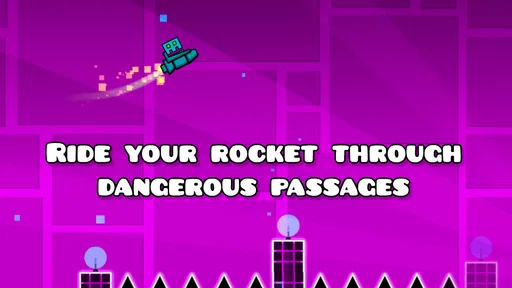
RobTop Games’ arcade game has a clear identity: clean geometric shapes, bright visual changes and action closely tied to music. The different movement styles, including flying a rocket and dealing with reversed gravity, give the runs variation without asking me to learn a large set of unrelated controls. Its appeal is also easy to share in conversation: someone can watch a tricky section, understand why it is difficult and see whether I can get through it on another attempt.
The same design can become tiring. A run that ends at a late obstacle may mean repeating earlier sections, and a player who dislikes restarting can experience that as busywork rather than a fair test. Music-led timing is energizing for me when I am in the mood, but it can make play feel intense rather than soothing. If I want a loose arcade game where I can improvise and recover from a mistake, a more forgiving alternative would suit me better. Here, the satisfaction comes from precision, so the frustration is part of the bargain.
Worth Reading Before You Choose

Baby Panda World Brings Quick Play to Modern Phones, but Its Game Library Feels Busy

ESPN’s Live Game View Makes Following Close Games Easier

QuizzLand Review: A Good Fit for Short Trivia Breaks, Not Every Player

Basketball Stars: Multiplayer Is Fast, but Can It Recover When Matches Go Wrong?

WEBTOON Turns Phone Updates Into a Better Reading Routine

Link to Windows Runs on Shared Habits, Not Social Feeds
The Thrill of the Dash
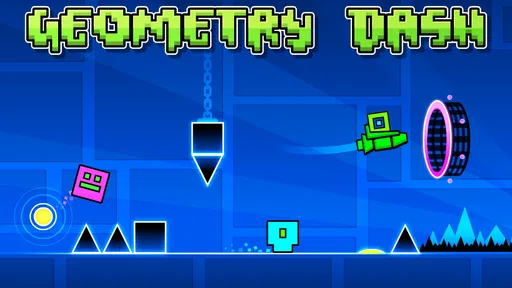
So, what's the deal with Geometry Dash Lite? Imagine a world where timing is everything. You control a little square that zooms through a kaleidoscope of vibrant levels. The objective? Jump, fly, and flip your way through as many obstacles as you can. Sounds simple, right? Well, think again.
The beauty of this game lies in its simplicity and the sheer adrenaline rush it offers. Each level is intricately designed with a unique soundtrack that syncs perfectly with your jumps. It’s like the game is daring you to keep up!
Gameplay Mechanics
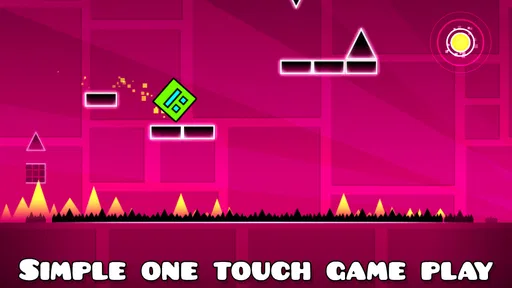
Now, let's dive a bit deeper into how it plays. The controls are straightforward—just tap to jump or hold to keep jumping. But don’t be fooled by its simplicity. The real challenge is mastering the timing and rhythm. One wrong move, and it's back to square one.
As you progress, you'll encounter different game modes—flying a rocket or reversing gravity, adding layers of complexity and fun. The game pushes your reflexes to the limit, and every win feels like a major achievement.
Visuals and Soundtrack
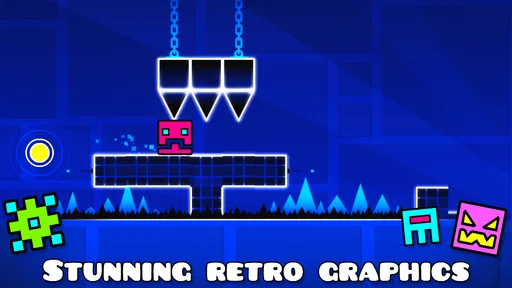
What keeps me coming back is the stunning visual experience. The neon hues and geometric patterns create a mesmerizing backdrop that complements the fast-paced action perfectly. And let's not forget the soundtrack—it's pure ear candy. Each track is catchy and amps up the excitement, making the game feel like a rhythmic dance of jumps and spins.
Why You Should Try It
Whether you're a casual gamer looking for a quick thrill or a hardcore player seeking a challenge, Geometry Dash Lite delivers. It's free, which is a huge plus, and offers enough content to keep you hooked for hours. Plus, it doesn’t require an internet connection, so you can enjoy it anywhere, anytime.
From the first week to a lasting habit
The first week is where the game’s strongest first impression lands: short attempts, immediate feedback and a clear reason to try again. After that, its value depends less on novelty and more on whether I enjoy gradual mastery. I would keep it installed as a compact skill challenge, not as a game that constantly supplies new surprises. That distinction matters. If I like returning to a familiar obstacle and getting a little farther through better timing, it can earn a place in my routine. If I need a steady stream of fresh systems or a story to pull me forward, the same focused design may feel limited.
A realistic use is opening it during a commute or a quiet wait, playing a handful of attempts, then stopping at a natural break rather than chasing a perfect run. The strongest habit tip is to set that boundary before starting: the restart loop makes “one more try” feel tempting, even when I no longer have the attention to improve. I also find it more rewarding to treat a failed run as information—remember the troublesome transition and adjust—than to tap through retries while distracted. This works best when I can give the screen my attention; it is a poor choice to play while walking or doing anything that needs awareness elsewhere.
How it compares with other arcade choices
Compared with a casual arcade game built around collecting items, free movement or forgiving recovery, this one asks for more precision and offers less room to improvise. That narrow focus is exactly why it can feel so satisfying: I am trying to execute a sequence cleanly, not juggling several goals. But someone who prefers experimentation may have more fun with an arcade alternative that lets them recover after a mistake or vary their approach. I would choose Geometry Dash Lite when I want a direct test of timing; I would choose a gentler, less rhythm-driven game when I want to unwind without a restart feeling like a setback.
It also suits players who enjoy watching their own improvement more than accumulating rewards. A useful personal check is whether I can name what I will change on the next attempt. If I can, another run has a purpose. If I cannot, I am probably repeating the same mistake and would benefit more from a short pause. That small habit helps preserve the fun over time and keeps a challenging session from turning into frustration.
Keeping the game useful over time
There is little ongoing maintenance in the ordinary sense: I do not need to tend a roster, manage a daily checklist or keep up with a long chain of tasks to make a short session worthwhile. Its upkeep is mainly about managing my own attention. A quick play can fit into a spare moment, while a longer session asks for patience and focus. The game is free, rated Everyone 10+, and has a 4.4 average from around 7.7 million ratings, with more than 500 million installs. Those figures suggest broad reach, but they do not change the personal question: do I enjoy repeating a demanding level enough to return?
For a phone that still runs Android 5.0 or later, the current version is 2.2.144. I would check that basic compatibility before deciding whether it fits an older device. The game’s appeal does not depend on a complicated setup: the controls are simple, and the challenge is in timing. Its focused format also means I would not choose it as a substitute for a deep, evolving game; I would keep it alongside other options for moments when a quick, concentrated arcade challenge is what I actually want.
Who should keep it—and who should move on
I recommend giving it a try if you like music-led action, clear controls and the feeling of gradually turning a difficult sequence into a reliable one. It is especially suited to players who can laugh off a failed attempt and return with a specific adjustment. It is less likely to suit someone who wants a relaxing background game, dislikes repeating the opening of a run, or gets stressed by precise timing. For those players, a forgiving arcade game—or a slower puzzle game with time to think—will probably be a better everyday companion.
Another trade-off is that the visual and musical intensity that makes a strong session memorable can be tiring when I am already overstimulated. I would not treat it as an automatic wind-down game before bed or as something to play while trying to multitask. Its best use is deliberate: a brief burst when I want to focus, not a passive distraction. That makes its lasting value more specific than its immediate appeal, but also easier to judge honestly.
In conclusion, Geometry Dash Lite is more than just a game; it's an addictive journey that tests your skills and patience. So, are you ready to take on the challenge? Give it a go and see how far you can dash!
Pros
- Engaging gameplay with rhythmic challenges.
- Visually appealing graphics and animations.
- Simple controls easy to master.
- Numerous levels offer varied difficulty.
- Offline play available for convenience.
Cons
- Limited features compared to full version.
- Ads can be disruptive between levels.
- No option for custom levels.
- Music can get repetitive over time.
- Requires precise timing and patience.
FAQs for Geometry Dash Lite
What is Geometry Dash Lite?
Geometry Dash Lite is a rhythm-based platformer game where players navigate through challenging levels filled with obstacles. The game requires precise timing and quick reflexes as players jump or fly to the beat of the music. It's a free version of the full Geometry Dash game, providing a taste of the gameplay experience.
How do I control the character in Geometry Dash Lite?
In Geometry Dash Lite, the controls are simple yet challenging. Players tap the screen to make their character jump. Timing is crucial as players navigate through a series of obstacles. The game also includes flying sections where players tap to control elevation. Mastering these controls is key to progressing in the game.
What are the main features of Geometry Dash Lite?
Geometry Dash Lite offers a variety of features including multiple levels with unique soundtracks, customizable character icons, and practice modes to help players improve their skills. The game is known for its vibrant graphics, engaging music, and challenging gameplay, which keeps players coming back for more.
Is Geometry Dash Lite suitable for all ages?
Geometry Dash Lite is suitable for a wide range of ages, though it may be more enjoyable for those who appreciate rhythm-based games and challenging gameplay. While it doesn't contain inappropriate content, the difficulty level might be frustrating for younger players, so parental guidance might be beneficial for very young users.
Are there in-app purchases in Geometry Dash Lite?
Geometry Dash Lite is free to download and play, but it does feature ads. While it doesn’t have in-app purchases, players who enjoy the game might consider purchasing the full version, Geometry Dash, which offers additional levels, features, and the ability to create and share custom levels.


